
Find the perfect MBR Membrane Manufacturer and Exporter
Hydraulic Retention Time in MBR Systems: The Complete Guide
Hydraulic Retention Time (HRT) is one of the most critical yet misunderstood parameters in Membrane Bioreactor (MBR) systems. Whether you’re designing a new wastewater treatment plant, optimizing an existing MBR system, or troubleshooting performance issues, understanding HRT can mean the difference between a highly efficient system and a costly operational nightmare.
In this comprehensive guide, we’ll break down everything you need to know about HRT in MBR systems—from basic concepts to advanced optimization strategies used by leading wastewater treatment professionals.
1. What is Hydraulic Retention Time (HRT)?
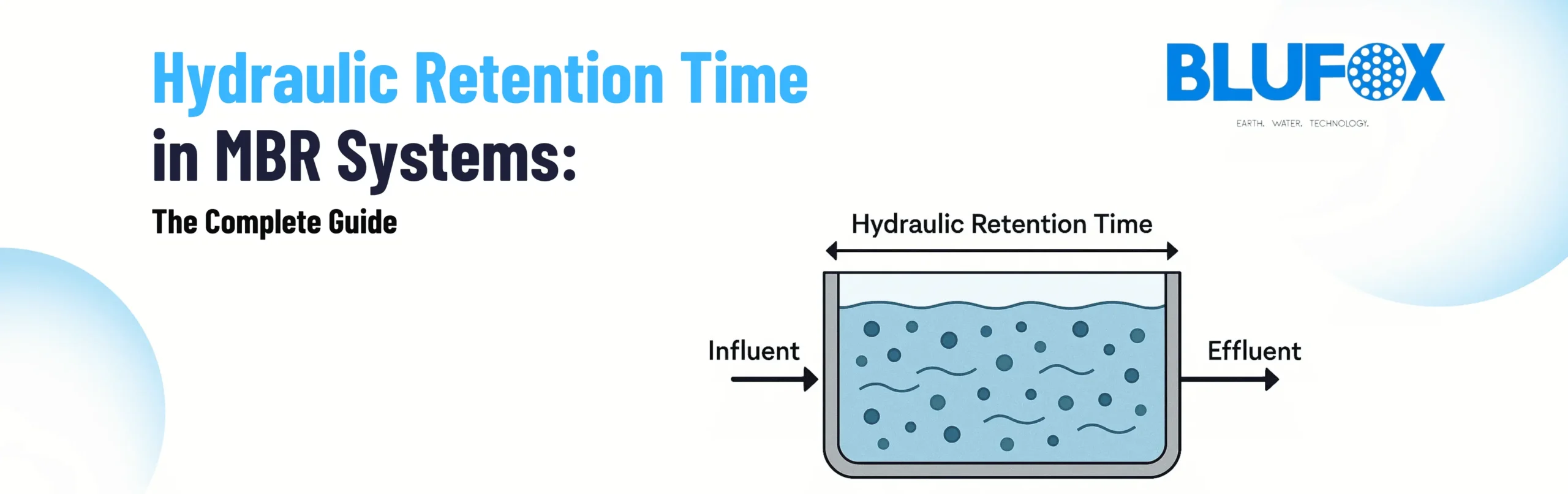
Hydraulic Retention Time (HRT)
is the average time that wastewater remains in the biological reactor of an MBR system before being filtered through the membrane.
Simple Definition:
HRT = Total volume of the bioreactor ÷ Influent flow rate
Think of it this way:
Imagine your MBR bioreactor as a container continuously receiving wastewater. HRT tells you how long, on average, each liter of water stays in that container before being treated and filtered out.
Why “Hydraulic” Retention Time?
The term “hydraulic” refers to the liquid phase—the actual wastewater flow. This distinguishes it from Solids Retention Time (SRT), which measures how long the biomass (microorganisms) stays in the system.
Units of Measurement:
HRT is typically expressed in:
- Hours (h) – Most common for MBR systems
- Days (d) – For systems with very long retention times
- Minutes (min) – Rarely used, only for specialized applications
Typical HRT range for MBR systems: 4-12 hours
2. Why HRT Matters in MBR Systems
HRT isn’t just a theoretical calculation—it directly impacts:
A. Treatment Efficiency
Longer HRT = More time for biological treatment
Microorganisms need sufficient time to:
- Break down organic matter (BOD/COD removal)
- Nitrify ammonia to nitrates
- Consume nutrients (nitrogen and phosphorus)
Too short HRT?
- Incomplete treatment
- Poor effluent quality
- Compliance failures
Too long HRT?
- Wasted tank volume
- Higher construction costs
- Increased energy consumption
- Diminishing returns on treatment quality
B. System Stability
Proper HRT ensures:
- Consistent effluent quality – Even with influent variations
- Better shock load handling – System can buffer sudden changes
- Reduced membrane fouling – More complete biodegradation means less organics reaching membrane
C. Operational Costs
HRT directly affects:
- Tank size – Longer HRT = Larger tanks = Higher capital costs
- Energy consumption – Larger volume = More aeration required
- Footprint – Land requirements increase with HRT
- Chemical usage – Affects cleaning frequency
D. Membrane Performance
In MBR systems specifically, HRT impacts:
- Membrane fouling rate – Proper HRT reduces foulants
- TMP (Transmembrane Pressure) rise – Slower with optimal HRT
- Membrane lifespan – Can extend from 3 to 5+ years
- Cleaning frequency – Reduces CIP requirements
Bottom Line: Getting HRT right is crucial for balancing treatment quality, system reliability, and operational costs.
3. How to Calculate HRT in MBR Systems
Basic Formula:
HRT (hours) = Bioreactor Volume (m³) ÷ Influent Flow Rate (m³/h)
Step-by-Step Calculation Example:
Given:
- Bioreactor volume: 500 m³
- Influent flow rate: 50 m³/h (1,200 m³/day)
Calculation:
HRT = 500 m³ ÷ 50 m³/h = 10 hours
Result: Wastewater stays in the bioreactor for an average of 10 hours before membrane filtration.
Important Considerations:
1. Which Volume to Use?
In MBR systems, you must consider:
Anoxic Zone Volume + Aerobic Zone Volume = Total Bioreactor Volume
Example with zones:
- Anoxic tank: 150 m³
- Aerobic tank: 350 m³
- Total bioreactor volume: 500 m³ ← Use this for HRT calculation
Do NOT include:
- Membrane tank volume (if separate)
- Equalization tank volume
- Storage tank volume
2. Average vs Peak Flow
Always design for peak flow conditions:
Example:
- Average flow: 1,000 m³/day (41.67 m³/h)
- Peak flow: 1,500 m³/day (62.5 m³/h)
Design HRT calculation should use peak flow:
HRT = 500 m³ ÷ 62.5 m³/h = 8 hours
This ensures adequate treatment even during peak demand.
3. Multi-Tank Systems
For systems with multiple tanks in series:
Example:
- Tank 1 (Anoxic): 150 m³
- Tank 2 (Aerobic): 200 m³
- Tank 3 (Aerobic): 150 m³
- Influent flow: 50 m³/h
Total HRT:
HRT = (150 + 200 + 150) ÷ 50 = 10 hours
Individual tank HRTs:
- Tank 1 HRT: 150 ÷ 50 = 3 hours
- Tank 2 HRT: 200 ÷ 50 = 4 hours
- Tank 3 HRT: 150 ÷ 50 = 3 hours
Quick HRT Calculator Table:
| Flow Rate (m³/day) | Tank Volume Needed for HRT | ||
|---|---|---|---|
| 6 Hours | 8 Hours | 10 Hours | |
| 500 | 125 m³ | 167 m³ | 208 m³ |
| 1,000 | 250 m³ | 333 m³ | 417 m³ |
| 2,000 | 500 m³ | 667 m³ | 833 m³ |
| 5,000 | 1,250 m³ | 1,667 m³ | 2,083 m³ |
4. Optimal HRT Values for Different Applications
HRT requirements vary significantly based on wastewater characteristics and treatment objectives.
A. Municipal Wastewater
Typical HRT: 6-10 hours
Characteristics:
- Moderate BOD: 200-400 mg/L
- Moderate COD: 400-800 mg/L
- Standard nutrient levels
Recommended HRT:
- Without nutrient removal: 6-8 hours
- With nitrification: 8-10 hours
- With nitrogen removal: 10-12 hours
Example: Residential township MBR plant treating 2,000 m³/day
- Design HRT: 8 hours
- Tank volume: 667 m³
- Expected effluent: BOD <5 mg/L, TSS <5 mg/L
B. Industrial Wastewater
HRT varies widely by industry:
Textile Industry
Typical HRT: 12-18 hours
Why longer?
- High COD: 1,500-3,000 mg/L
- Complex dyes (difficult to degrade)
- Variable pH and temperature
- Presence of toxic compounds
Using BF-N Series membranes:
- HRT: 14 hours optimal
- MLSS: 10,000-12,000 mg/L
- Achieves: COD <100 mg/L, Color removal >95%
Pharmaceutical Industry
Typical HRT: 18-24 hours
Why longest?
- Extremely high COD: 3,000-10,000 mg/L
- Bio-refractory compounds
- Antibiotic residues
- Strict effluent standards
Recommended approach:
- Two-stage MBR with HRT 20+ hours
- Extended aeration
- Specialized biomass acclimation
Food & Beverage
Typical HRT: 8-12 hours
Characteristics:
- High BOD: 1,000-3,000 mg/L
- Easily biodegradable organics
- Fats, oils, and grease (FOG)
- Seasonal variations
Optimal HRT:
- Dairy: 10-12 hours
- Brewery: 8-10 hours
- Soft drinks: 6-8 hours
Key consideration: Adequate pre-treatment for FOG removal
Pulp & Paper
Typical HRT: 10-14 hours
Challenges:
- Moderate to high COD: 800-2,000 mg/L
- Lignin compounds
- Color issues
- Fiber content
Using hollow fiber MBR:
- HRT: 12 hours
- Effective fiber retention
- Consistent effluent quality
C. Commercial/Institutional
Hotels & Resorts
Typical HRT: 6-8 hours
Characteristics:
- Similar to municipal
- High peak-to-average flow ratio
- Kitchen wastewater component
Design tip: Use 8-hour HRT at peak flow
Hospitals
Typical HRT: 10-14 hours
Why longer?
- Pharmaceutical traces
- Disinfectant residues
- Pathogen concerns
- Stricter discharge norms
Critical: Extended HRT helps reduce pharmaceutical compounds
D. Zero Liquid Discharge (ZLD) Systems
Typical HRT: 8-10 hours
Application:
- Pre-treatment before RO
- Ultra-low effluent targets
- Water reuse applications
BF-N series advantage:
- Consistent <5 NTU turbidity
- Enables 95%+ RO recovery
- Minimal RO membrane fouling
5. HRT vs SRT: Understanding the Critical Difference
This is where most people get confused. Let’s clear it up once and for all.
HRT (Hydraulic Retention Time)
- Measures: How long water stays in the system
- Typical range: 4-12 hours
- Controls: Treatment efficiency, tank size
SRT (Solids Retention Time) / MCRT (Mean Cell Residence Time)
- Measures: How long biomass/sludge stays in the system
- Typical range: 15-30 days (for MBR)
- Controls: Biomass concentration, sludge production
Why They’re Different in MBR:
In conventional activated sludge:
- HRT ≈ SRT (same ballpark)
- Both are relatively short
In MBR systems:
- HRT: 6-10 hours (short)
- SRT: 20-30 days (long)
- Massive difference!
Why?
The membrane acts as a complete barrier:
- Water passes through quickly (HRT)
- ALL biomass is retained (extends SRT)
- Sludge only leaves via waste sludge pumping
Why Both Matter:
| Parameter | Controls | Affects |
| HRT | Contact time for treatment | Treatment efficiency, tank size, capital cost |
| SRT | Biomass age and concentration | Sludge production, nutrient removal, operational cost |
Optimization strategy:
- Short HRT (6-8 hours) = Smaller tanks = Lower capital cost
- Long SRT (20-30 days) = Less sludge = Lower disposal cost
- MBR enables this combination = Best of both worlds!
6. Factors Affecting HRT Selection
Choosing the right HRT isn’t arbitrary. Here are the key factors:
A. Influent Characteristics
1. BOD/COD Concentration
Rule of thumb:
- Low strength (<500 mg/L COD): 6-8 hours HRT
- Medium strength (500-1,500 mg/L COD): 8-12 hours HRT
- High strength (>1,500 mg/L COD): 12-18 hours HRT
Why? Higher organic load needs more time for microbial degradation.
2. Biodegradability
Easily biodegradable (food waste, domestic):
- Shorter HRT sufficient (6-8 hours)
- Microbes quickly consume organics
Slowly biodegradable (textile dyes, chemicals):
- Longer HRT required (12-18 hours)
- Complex compounds need extended contact time
Bio-refractory compounds (pharmaceuticals):
- Very long HRT needed (18-24+ hours)
- May require pre-treatment or specialized biomass
3. Nitrogen Removal Requirements
Nitrification (NH₃ → NO₃):
- Add 3-4 hours to base HRT
- Temperature dependent (slower in winter)
Complete nitrogen removal (nitrification + denitrification):
- Add 4-6 hours to base HRT
- Requires anoxic zone
Example:
- Base HRT for BOD removal: 6 hours
- With nitrification: 6 + 4 = 10 hours
- With complete N-removal: 6 + 6 = 12 hours
B. Temperature Effects
Critical factor often overlooked!
Microbial activity doubles with every 10°C increase (up to 35°C)
| Temperature | HRT Adjustment |
|---|---|
| 25-30°C (optimal) | Base HRT (design value) |
| 20-25°C | +10-20% HRT |
| 15-20°C | +20-30% HRT |
| 10-15°C | +30-50% HRT |
| <10°C | +50-100% HRT or heating required |
Design recommendation:
- Design for minimum expected temperature
- This ensures year-round compliance
- Consider seasonal variations in your region
Example:
- Summer operation (28°C): 8-hour HRT adequate
- Winter operation (15°C): 10-11 hour HRT needed
- Design for 11 hours to handle winter
C. Effluent Quality Requirements
Stricter standards = Longer HRT
| Discharge Standard | Typical HRT |
|---|---|
| BOD <30 mg/L, TSS <50 mg/L | 6 hours |
| BOD <10 mg/L, TSS <10 mg/L | 8 hours |
| BOD <5 mg/L, TSS <5 mg/L | 10 hours |
| Reuse quality (BOD <3 mg/L) | 10-12 hours |
Indian standards example:
- General discharge: 8-hour HRT sufficient
- Into surface water bodies: 10-hour HRT recommended
- For reuse applications: 12-hour HRT optimal
D. Membrane Type and Configuration
Different membranes, different requirements:
Hollow Fiber Membranes (like BF-N Series)
Advantages:
- High packing density
- Excellent biomass retention
- Can operate at higher MLSS
HRT impact:
- Can work with shorter HRT (6-8 hours)
- Higher MLSS compensates for shorter contact time
- Better treatment efficiency per unit volume
Flat Sheet Membranes
Characteristics:
- Lower packing density
- Typically lower MLSS operation
HRT impact:
- May need longer HRT (8-10 hours)
- Compensates for lower biomass concentration
Submerged vs External Configuration
Submerged (membrane in tank):
- HRT = Full tank volume ÷ Flow
- Straightforward calculation
External (sidestream):
- May have separate membrane tank
- Use only bioreactor volume for HRT calculation
- Don’t include membrane tank volume
E. MLSS Concentration
Inverse relationship with HRT:
Higher MLSS = Shorter HRT possible
Explanation:
- More biomass = faster treatment
- MBR can maintain 8,000-15,000 mg/L MLSS
- Conventional systems: only 2,000-4,000 mg/L
Comparison:
| System Type | MLSS | Required HRT |
|---|---|---|
| Conventional AS | 3,000 mg/L | 12-18 hours |
| MBR (standard) | 8,000 mg/L | 8-10 hours |
| MBR (high rate) | 12,000 mg/L | 6-8 hours |
BF-N series advantage:
- Can operate at 10,000-12,000 mg/L stably
- Enables shorter HRT
- Smaller footprint
7. Common HRT Mistakes (And How to Avoid Them)
After working with 500+ MBR installations, we’ve seen these mistakes repeatedly:
Mistake #1: Using Average Flow Instead of Peak Flow
The error: Designer calculates HRT using average daily flow.
Real-world scenario:
- Average flow: 1,000 m³/day (41.67 m³/h)
- Peak flow: 1,500 m³/day (62.5 m³/h)
- Designed HRT at average: 10 hours
- Actual HRT at peak: 6.7 hours ❌
The consequence:
- Effluent violations during peak hours
- Membrane fouling accelerates
- Client complaints
The fix: ✅ Always design for peak flow conditions ✅ Use peak factor of 1.5-2.0 for municipal ✅ For industrial, analyze actual flow patterns
Mistake #2: Ignoring Temperature Variations
The error: Designing HRT based on summer conditions only.
What happens in winter:
- Microbial activity drops 30-50%
- Treatment efficiency plummets
- Compliance failures
Real example:
- Himachal Pradesh textile plant
- Designed HRT: 12 hours (for 25°C)
- Winter temperature: 12°C
- Actual required HRT: 18 hours ❌
- Result: Consistent effluent violations Nov-Feb
The fix: ✅ Design for lowest expected temperature ✅ Add 20-30% safety margin for cold regions ✅ Consider tank heating for extreme climates
Mistake #3: Confusing HRT with SRT
The error: “My MBR has 25-day HRT” (Actually means SRT)
Why this matters:
- Leads to massive overdesign
- Wastes crores in capital cost
- Or opposite: dangerous underdesign
The fix: ✅ Remember: HRT = hours, SRT = days ✅ HRT = Water residence time ✅ SRT = Biomass age
Mistake #4: Not Accounting for Recirculation
The error: Calculating HRT without considering internal recirculation flows.
In systems with:
- Mixed liquor recirculation
- Nitrification recirculation
- RAS (Return Activated Sludge)
The calculation changes:
Correct formula with recirculation:
Actual HRT = Bioreactor Volume ÷ (Influent Flow + Recirculation Flow)
Example:
- Volume: 500 m³
- Influent: 50 m³/h
- Recirculation: 50 m³/h
- Effective HRT: 500 ÷ (50+50) = 5 hours (not 10!)
The fix: ✅ Account for all internal flows ✅ Use “effective HRT” in calculations ✅ Or use separate HRT for each zone
Mistake #5: One-Size-Fits-All Approach
The error: “All our plants use 8-hour HRT” regardless of wastewater type.
Why it fails:
- Municipal wastewater ≠ Pharmaceutical wastewater
- Each needs different treatment time
- Recipe for either over/underdesign
Real example: A consultant used 8-hour HRT for:
- ✅ Municipal plant: Works fine
- ❌ Textile plant: Consistent failures
- ❌ Pharmaceutical plant: Disaster
The fix: ✅ Conduct treatability studies ✅ Pilot test when in doubt ✅ Customize HRT for each application
Mistake #6: Neglecting Future Growth
The error: Designing for current flow only, no provision for expansion.
What happens:
- Population grows / Industry expands
- Flow increases 30-50% in 5 years
- HRT drops proportionally
- System becomes inadequate
Example:
- Original design: 1,000 m³/day, 10-hour HRT, 417 m³ tank
- After 5 years: 1,400 m³/day flow
- Actual HRT: 7.1 hours ❌
- No space for expansion
The fix: ✅ Design for 10-15 year horizon ✅ Add 20-30% flow buffer ✅ Or modular design for phased expansion
Mistake #7: Inadequate Safety Margin
The error: Designing at the absolute minimum HRT required.
Why it’s risky:
- No buffer for upsets
- Influent variations
- Equipment downtime
- Maintenance periods
Best practice: ✅ Add 15-20% safety margin to calculated minimum HRT ✅ Example: Minimum HRT needed = 8 hours ✅ Design HRT = 8 × 1.2 = 9.6 hours (round to 10)
This provides:
- Buffer for variations
- Easier operation
- Better compliance record
- Lower stress on membranes
8. How to Optimize HRT for Maximum Efficiency
Strategy #1: Zone-Based HRT Approach
Don’t use uniform HRT throughout—optimize each zone:
For nitrogen removal systems:
Anoxic Zone:
- HRT: 3-4 hours
- Purpose: Denitrification
- No aeration (saves energy)
Aerobic Zone:
- HRT: 6-8 hours
- Purpose: BOD removal + Nitrification
- Full aeration
Total system HRT: 9-12 hours
Benefit:
- Optimized treatment
- 20-30% energy savings vs uniform aeration
- Better nutrient removal
Strategy #2: Variable HRT Operation
Adjust HRT based on conditions:
High load periods (daytime):
- Increase flow through system
- Accept slightly lower HRT (still above minimum)
Low load periods (nighttime):
- Reduce flow
- Extended HRT provides extra treatment
Implementation:
- Use equalization tank
- Variable speed pumps
- Automated flow control
Example (hotel):
- Peak hours (8 AM – 10 PM): 8-hour HRT
- Off-peak (10 PM – 8 AM): 12-hour HRT
- Average: 9 hours, but optimized
Strategy #3: MLSS Optimization
Higher MLSS = Shorter HRT possible
Standard approach:
- MLSS: 8,000 mg/L
- Required HRT: 10 hours
Optimized approach with BF-N series:
- MLSS: 12,000 mg/L
- Required HRT: 8 hours
- Tank size reduction: 20%
Cost savings:
- 20% smaller tank
- Same treatment quality
- Lower capital cost
Note: Requires membranes capable of handling high MLSS (BF-N series tested up to 15,000 mg/L)
Strategy #4: Pre-Treatment Enhancement
Better pre-treatment = Shorter HRT needed
Add/improve:
- Fine screening (1-2 mm)
- Dissolved air flotation (DAF)
- Primary settling
- Equalization
Result:
- Lower organic load to MBR
- Can reduce HRT by 15-20%
- Smaller bioreactor
- Lower operating costs
ROI calculation:
- Pre-treatment cost: ₹30 L
- Bioreactor size reduction: 100 m³
- Savings in bioreactor: ₹50 L
- Net benefit: ₹20 L + Lower operating cost
Strategy #5: Pilot Testing
For complex wastewater, don’t guess—test:
Pilot MBR setup:
- 3-6 month trial
- Test different HRT values
- Monitor effluent quality
- Measure membrane fouling
Typical test matrix:
- HRT 1: 6 hours
- HRT 2: 8 hours
- HRT 3: 10 hours
- Compare results
Outcome:
- Precise HRT determination
- Avoid over/underdesign
- Confident full-scale design
Investment: ₹5-10 L for pilot Savings: ₹50 L – 1 Cr in better design
Strategy #6: Seasonal Adjustment
In regions with high temperature variation:
Summer operation (25-30°C):
- Run at minimum HRT
- Higher throughput
- Lower operating cost
Winter operation (15-20°C):
- Extend HRT by 20-30%
- Reduce flow if possible
- Maintain compliance
Implementation:
- Design tanks with 30% extra volume
- Use equalization for flow control
- Adjust based on performance monitoring
Conclusion: Getting HRT Right
Hydraulic Retention Time is one of the most critical design parameters in MBR systems. Get it right, and you have:
- Consistent effluent quality
- Extended membrane life
- Optimized costs
- Trouble-free operation
Get it wrong, and you face:
- Compliance violations
- Rapid membrane fouling
- Costly retrofits
- Operational nightmares
Key Takeaways:
✅ Design for worst-case conditions (peak flow, minimum temperature)
✅ Add 15-20% safety margin to calculated minimum HRT
✅ Customize HRT based on wastewater characteristics
✅ Consider total cost (capital + operating), not just tank size
✅ Pilot test for complex or unknown wastewater
✅ Optimize, don’t minimize – adequate HRT pays for itself
✅ Use high-quality membranes (like BF-N series) to maximize efficiency


MBR Membrane Price
BF Series Hollow Fiber MBR Membrane
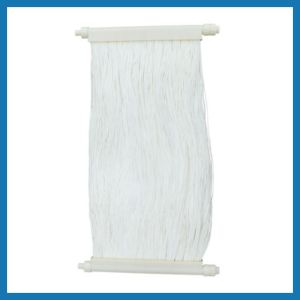
Hollow Fiber MBR (membrane bioreactor) membranes are a type of membrane used in wastewater treatment systems to purify and remove impurities from wastewater.
SUS Series Hollow Fiber MBR Membrane
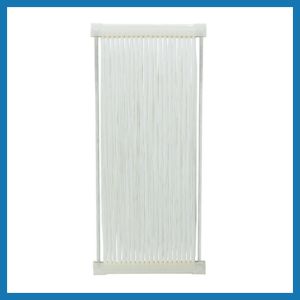
Hollow Fiber MBR (membrane bioreactor) membranes are a type of membrane used in wastewater treatment systems to purify and remove impurities from wastewater.
Submerge Type Poreflon Module
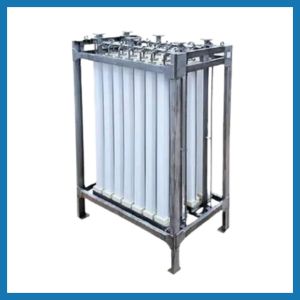
POREFLON Membrane Modules are durable high – quality membranes that have a chemical and thermal resistance. These modules are reasonably priced and easy to handle.
Cross Flow Membrane
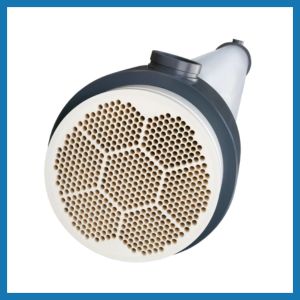
Cross Flow (Membrane Bioreactor) membranes are a type of filtration membrane configuration used in wastewater treatment processes.
SiC/Ceramic Membrane
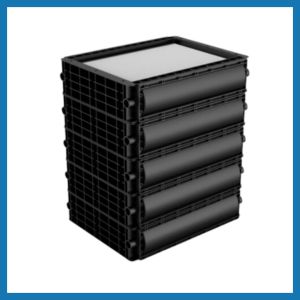
SiC / Ceramic Membrane MBR (Membrane Bioreactor) membranes are a type of filtration membrane used in wastewater treatment processes.
Reverse Osmosis (RO) Membrane
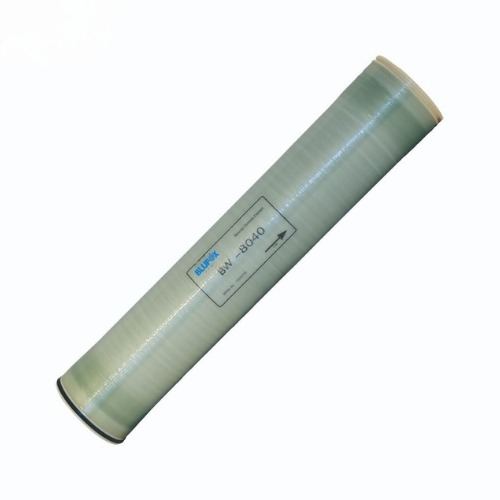
Reverse Osmosis(RO) Membranes are a specialized type of membrane designed for high-efficiency water purification across wide range of applications.
Ultra Filtration (UF) Membrane
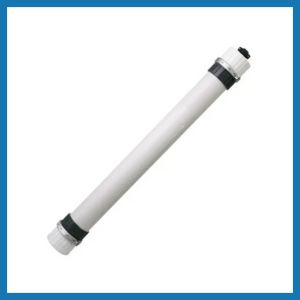
ZETA – Ultrafiltration membranes are designed for the separation of particles & micromolecules from liquids through a size based filtration process.
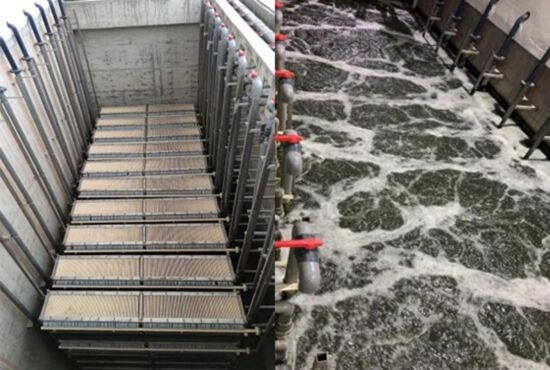
Municipal Wastewater Treatment
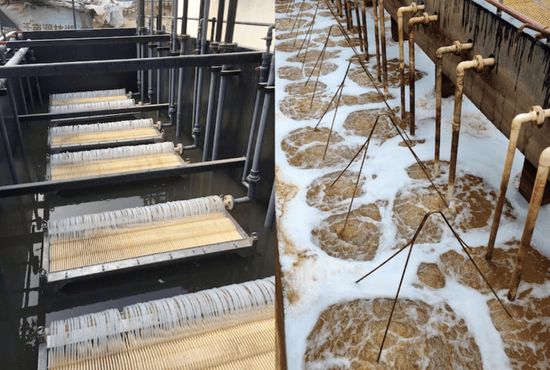
Expressway Wastewater Treatment
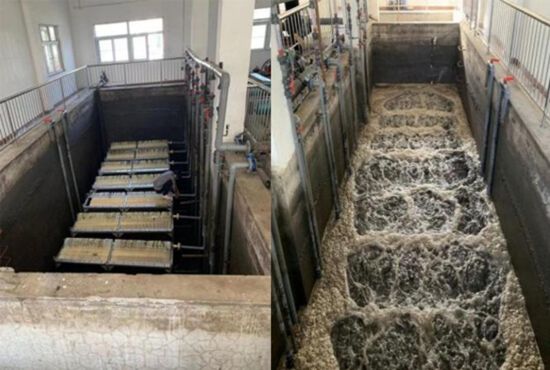
Hospital Wastewater Treatment
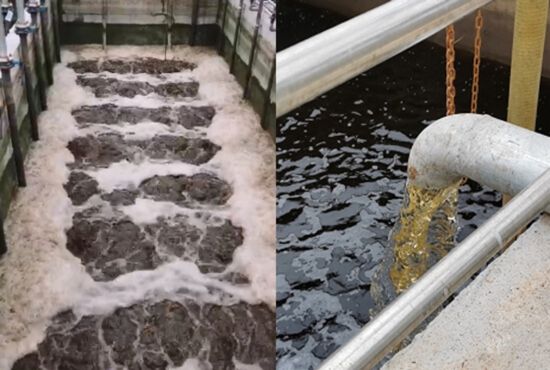
Husbandry Wastewater Treatment
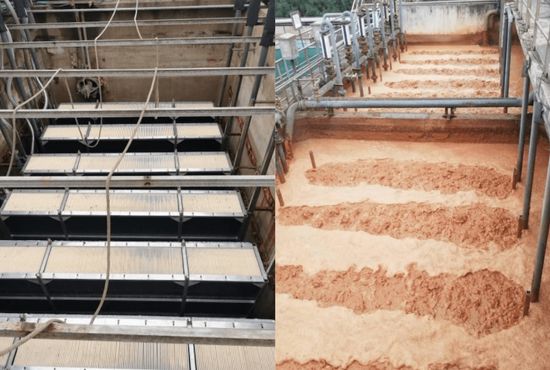
Chemical Wastewater Treatment
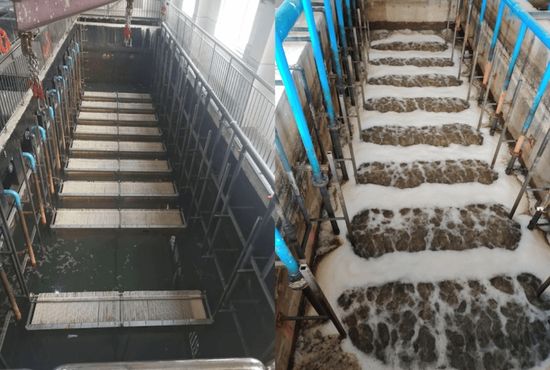
Laundry Wastewater Treatment
Applications
Membrane reactors are used throughout the world, for industrial as well as municipal wastewater.
For industrial wastewater, there are various full-scale applications in a variety of industrial sectors, such as foods, (petro) chemicals, pharmacy, electronics, laundries, paper, textile, agriculture, abattoirs, and percolate waters from disposal sites and hospitals.
Other sectors where MBR may be implemented include the Processing of finished oil, sludge from wastewater purification, car body repair and car body companies, car and truck wash, the graphics industry, tank and barrel cleaning, paint, glaze, varnish and printing ink production, foundries, metal processing, and refineries.
Why Choose Blufox?
We are a high-tech enterprise specializing in wastewater treatment industries. We have the core technology of producing MBR membrane components and have high production capacity, aiming to build a high-quality brand of MBR production and sales all over the world.

Factory Supply
Our factory has 2 production lines dedicated to the production of MBR Membrane.

Great support
The staff you interface with are experienced and certified in their English language skills.

Design on Demand
You provide the project information and we generally will give you a solution.

Quality Standards
We have a very professional quality audit process after the production is completed.
Happy Clients
I have been working with Blufox for 2 years now, and I am glad I chose them from the beginning. Their products are of very high quality, and my clients have never complained about their products. Besides MBR membranes, they also have other good quality products, such as water pumps and air blowers, which suit my projects well. So if possible, I suggest you try their other products as well.
Hollow Fibre Membrane
Hollow Fibre Membranes
Top 10 MBR Membrane Companies in India
Top 5 MBR Membrane Companies in India
Membrane Bioreactors
Chemical MBR Packaged Membrane System
Chemical MBR Packaged Membrane
Hollow Fibre Membrane Modules
Introduction
Membrane bioreactor (MBR) technology is a highly efficient and cost-effective way of treating wastewater. It combines the conventional activated sludge process with membrane filtration technology to remove contaminants and produce high-quality effluent. The MBR process has gained popularity in India due to its ability to produce high-quality treated water, minimize environmental impact, and reduce operational costs. In this article, we will discuss MBR membrane manufacturers in India and why blufoxmembranes.com is the best company for it.
Hollow Fibre Membrane Modules Manufacturers in India
There are several MBR membrane manufacturers in India. Some of the popular manufacturers include:
Blufox Eco Ventures
Dow Chemicals India Pvt Ltd
Hydranautics – A Nitto Group Company
Toray Industries (India) Pvt. Ltd.
Pall India Pvt Ltd
Membrane Solutions Pvt Ltd
Pentair Water India Pvt Ltd
Blufox Membranes – The Best Company for MBR Membrane
Among the many MBR membrane manufacturers in India, Blufox Membranes stands out as the best company. Blufox Membranes is a leading provider of MBR membranes in India. The company specializes in the design, manufacturing, and supply of advanced membrane solutions for wastewater treatment applications. Blufox Membranes has established itself as a market leader in MBR membrane technology due to its commitment to quality, reliability, and innovation. Hollow Fibre Membrane Modules
Blufox Membranes produces high-quality membranes that are designed to provide optimal performance and durability. The membranes are manufactured using state-of-the-art equipment and advanced materials to ensure that they meet the highest standards of quality. Blufox Membranes also offers a wide range of membrane products to meet the needs of different wastewater treatment applications. These products include ultrafiltration (UF) membranes, microfiltration (MF) membranes, and nanofiltration (NF) membranes. Hollow Fibre Membrane Modules
Blufox Membranes has a team of experienced and knowledgeable professionals who are dedicated to providing excellent customer service. The company’s technical support team is always available to help customers with any technical questions or issues that they may have. Blufox Membranes also provides training and support to its customers to help them maximize the performance of their membrane systems. Hollow Fibre Membrane Modules
In addition to producing high-quality membranes, Blufox Membranes also offers cost-effective solutions to its customers. The company’s membranes are designed to be long-lasting and require minimal maintenance, which helps to reduce operational costs. Blufox Membranes also offers competitive pricing on its products, which makes it an affordable option for many wastewater treatment applications.
Conclusion
MBR membrane technology is becoming increasingly popular in India due to its ability to produce high-quality treated water, minimize environmental impact, and reduce operational costs. There are several MBR membrane manufacturers in India, but Blufox Membranes stands out as the best company for MBR membrane technology. Blufox Membranes produces high-quality membranes that are designed to provide optimal performance and durability. The company also offers excellent customer service, cost-effective solutions, and competitive pricing, which makes it an ideal choice for wastewater treatment applications. If you are looking for an MBR membrane manufacturer in India, we highly recommend blufoxmembranes.com.
Introducing the extraordinary world of Hollow Fibre Membrane Modules, where innovation and efficiency converge to redefine the realm of filtration and separation processes. These remarkable modules are the epitome of cutting-edge technology, harnessing the power of hollow fibres to revolutionize various industries and applications.
Imagine a network of slender, microscopic tubes intricately woven together, forming a labyrinthine matrix within the core of a compact module. These hollow fibres, composed of high-performance materials such as polymers or ceramics, possess an intricate structure that combines remarkable strength with exceptional permeability.
The true marvel lies in the remarkable capabilities of these hollow fibres. Each individual fibre acts as a conduit, enabling precise control over the separation and filtration processes. Fluids, gases, or even suspended particles encounter the intricate web of fibres, undergoing a meticulous journey of purification and extraction.
Within this intricate framework, countless applications come to life. From water treatment and desalination to pharmaceutical and biotechnological processes, Hollow Fibre Membrane Modules find their place at the forefront of scientific advancement. They elegantly tackle challenges ranging from removing impurities and contaminants to facilitating the separation of valuable compounds, all while minimizing energy consumption and waste production.
Their versatility knows no bounds. These modules gracefully navigate the intricate dance of separating components based on size, molecular weight, or even charge, effectively enabling the extraction of vital substances and the elimination of unwanted elements. The result is an enhanced and sustainable production process, ensuring the highest quality and purity for a myriad of industries.
Beyond their exceptional performance, these modules boast unparalleled scalability and flexibility. As the demand for filtration and separation grows, Hollow Fibre Membrane Modules effortlessly adapt, seamlessly integrating into existing systems or spearheading the design of novel architectures. Their modular nature allows for easy customization, enabling tailored solutions that meet the unique requirements of each application.
However, their impact extends beyond industries and laboratories. Hollow Fibre Membrane Modules have the potential to revolutionize the lives of millions, providing access to clean water in remote regions or disaster-stricken areas. Their ability to efficiently remove harmful pathogens and contaminants offers a glimmer of hope for those in dire need, uplifting communities and transforming lives.
In the realm of innovation, Hollow Fibre Membrane Modules stand tall, embodying the pinnacle of technological achievement in the field of filtration and separation. Through their exceptional capabilities, they redefine what is possible, empowering industries, enabling progress, and creating a brighter, more sustainable future for all.